About
A family business, and fifty years of work.
B-E-St Animal Health is the equine side of JeeCee International — a family company in Bassevelde, Belgium, built on one man's search for what actually helps a body repair itself.

Two generations
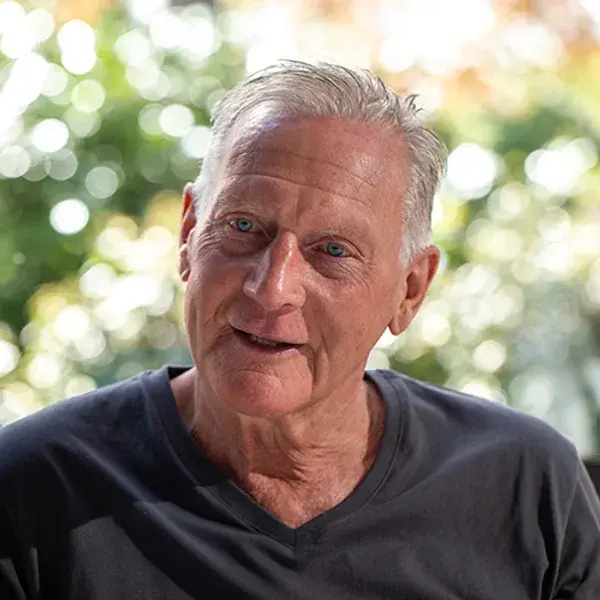
Jacques Caluwé Sr.
Founder
The founder is a total therapist: someone who spent decades travelling to find the most advanced therapies wherever they were being practised, learning them, and applying them. B-E-St was built out of that search rather than out of a laboratory.
Fifty years of work sits behind the technology.
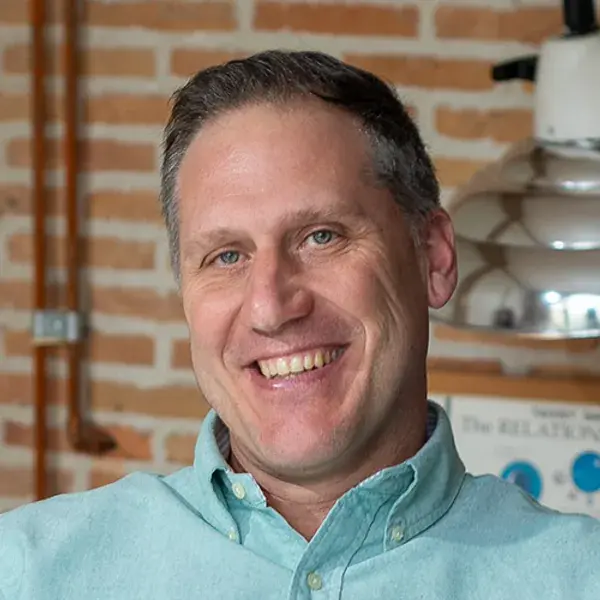
Jacques Caluwé Jr.
The business now
Jacques Caluwé Jr. runs the company today. What began as one man's practice is now a technology used by more than 1.000 therapists in 35 countries — physiotherapists, osteopaths, sports clinics, and the people who look after professional athletes.

Your BEST Self Day After Day, by Jacques Caluwé, tells the company's story at length.
The salamander
A salamander regrows a lost tail. The cells around the wound step back to an earlier, undifferentiated state and rebuild what was there — a repair the animal performs on itself.
In the 1980s the American orthopaedic surgeon Robert O. Becker asked what governs it. Measuring the electrical potential at the wound, he found it swings positive in the day after an injury, then travels back down through negative over the weeks the limb takes to rebuild. He called it the injury current, and later the healing current. In frogs, which do not regenerate a limb, the potential simply returns to normal and nothing grows back.
Becker went further, and reported that applying a current at the wound — small, and with the polarity the right way round — changed how regeneration went. That is the lineage this technology comes from: the idea that repair is partly an electrical business, and that a current small enough can work with it rather than talk over it.
The body already knows how to repair. The useful question is what supports it in doing so.
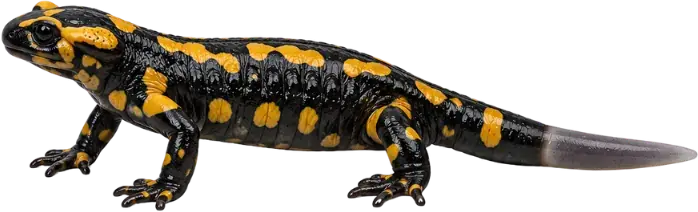
Mother Nature's healing power.
B-E-St Animal Health
Why horses
The human work behind these programs is not general medicine. The B-E-St Academy has been run for a decade by a therapist who spent forty years on Olympic swimmers and rowers, first-division footballers, and elite cyclists and triathletes. What the programs were built around is athlete recovery — training load, a competition calendar, and a body that has to be ready again on a date somebody else has set.
A sport horse lives to exactly that calendar.
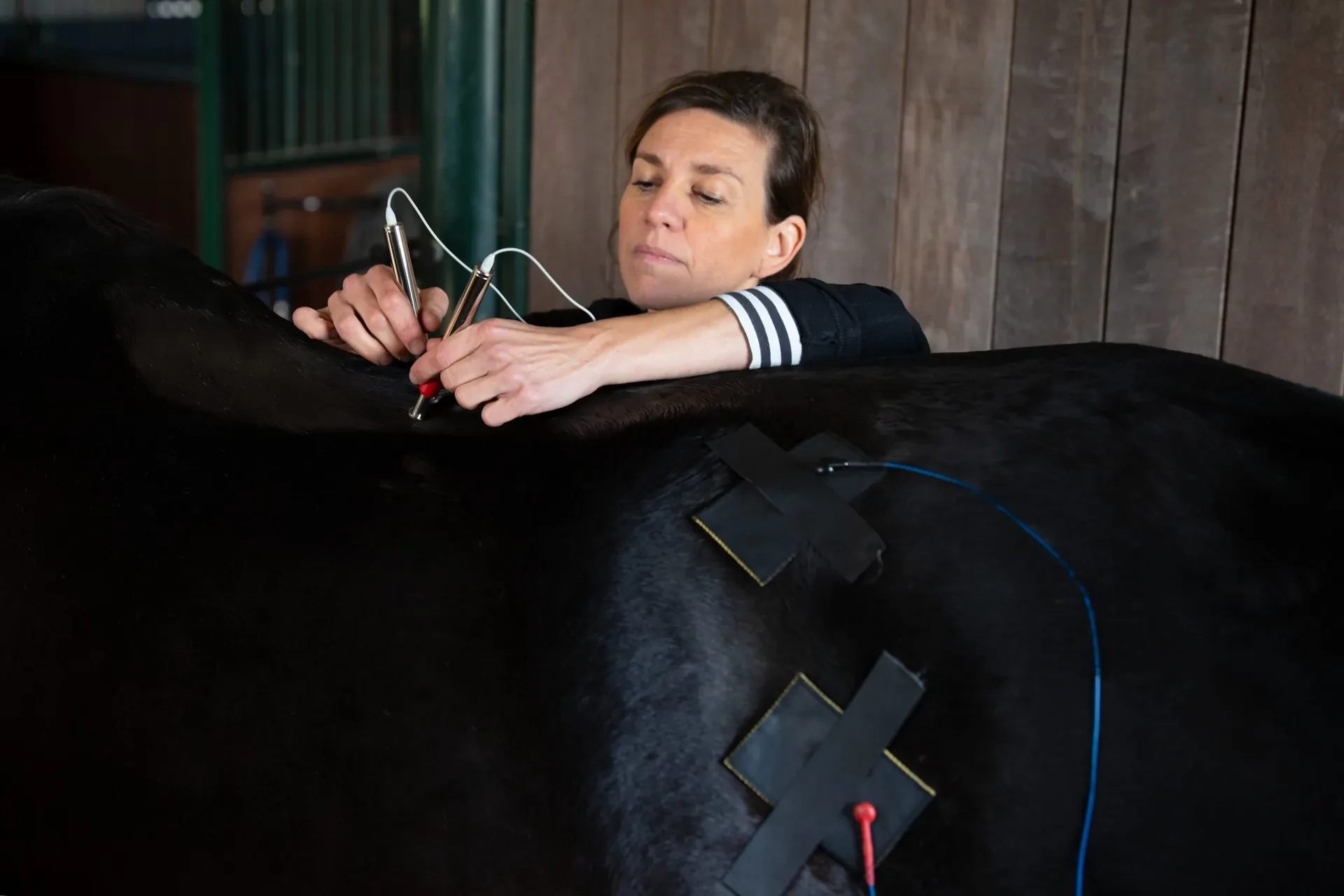
The equine side of the company is older than this website. Practitioners have been working with B-E-St on horses for years, and the equine library was built as its own body of work: its own programs, reasoned out for horse anatomy and horse situations, with its own placements and its own manuals. It is not the human library with the names changed.
What is new is the decision to run it properly as its own division.
The person on the other end
If you write to B-E-St Animal Health, Jana Nemcova is who answers. She grew up with horses and has spent her working life with them — as a groom, as a rider, as a trainer, several of those years within natural horsemanship — and she has run her own agency in the equestrian world.
She came to B-E-St from a different direction: through biohacking and longevity, and the question of what keeps a body working well for longer. What the same technology could do for a horse followed from there, and taking on the animal side followed from that.
This division is being restarted rather than started — with horses first, and with animals more widely after them.
“Working with sport horses, you see how much load they carry every day, and how much of it they carry for us. This is a way of giving some of that back, and of making what we ask of them easier to carry.”